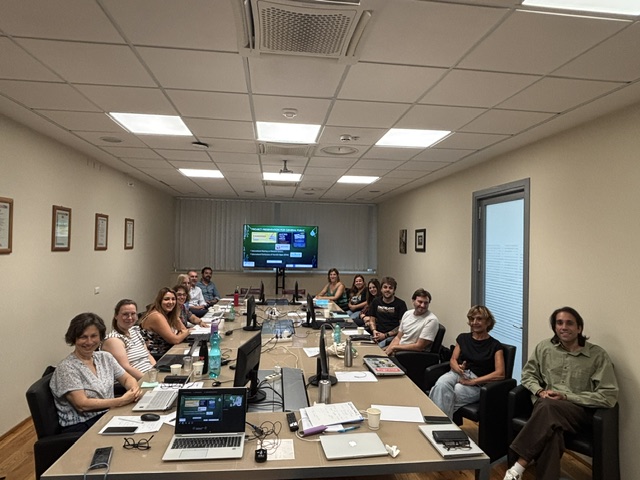
On 17 and 18 September 2026,the annual meeting of the MISSION project took place at the Universityof Rome Tor Vergata (UNITOV) in Rome, bringing together the project team workingon the development of new solutions for water quality monitoring, with aparticular focus on the detection and monitoring of harmful cyanobacterialblooms.
The MISSION project involves 7partners from Portugal, Italy and Norway, including IPMA, EDP-Labelec,SINTEF, AlgaRes, the University of Aveiro, the University of Rome Tor Vergata,and the Norwegian University of Life Sciences.
During the meeting, the mainprogress achieved so far was presented and discussed, along with thedifficulties and challenges encountered. Several topics essential for thedevelopment of a sensor system for cyanotoxin detection were discussed by thepartners including the design of a microfluidic sensor system as well as the sharingof cyanobacterial cultures and natural water samples, which are essential forthe optimization of the sensors currently under development. The disseminationof the project’ activities was also addressed, as these are essential toraise awareness of the work developed.
The meeting also provided anopportunity to visit the laboratory facilities and research spaces of UNITOVand AlgaRes, providing partners with an opportunity to see first-hand wherepart of the project’s research activities are taking place and to exchange knowledgeabout the ongoing work.
The MISSION project is supportedby the European Union through the European Partnership Water4All (GrantAgreement No. 101060874). Each consortium partner receives funding from theirrespective national funding agencies.
Stay connected: Follow us on social media for the latest news, research, and events.